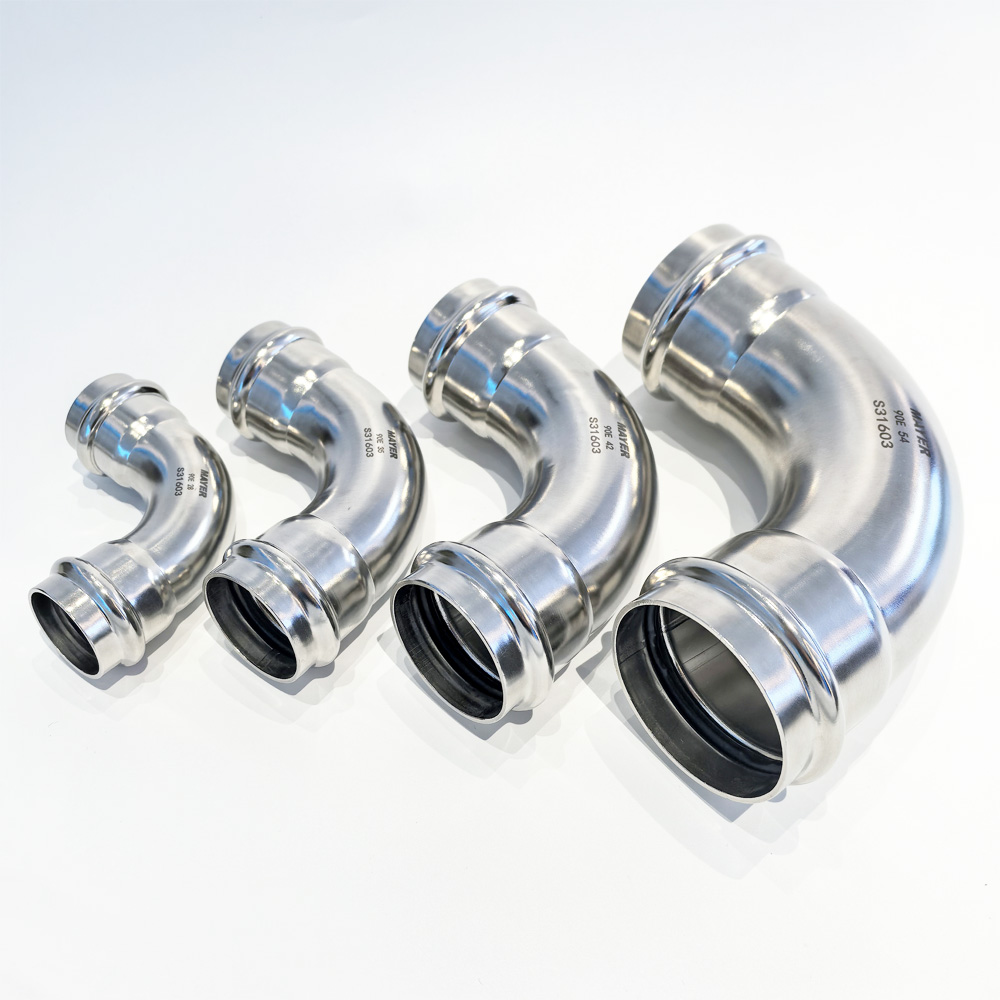
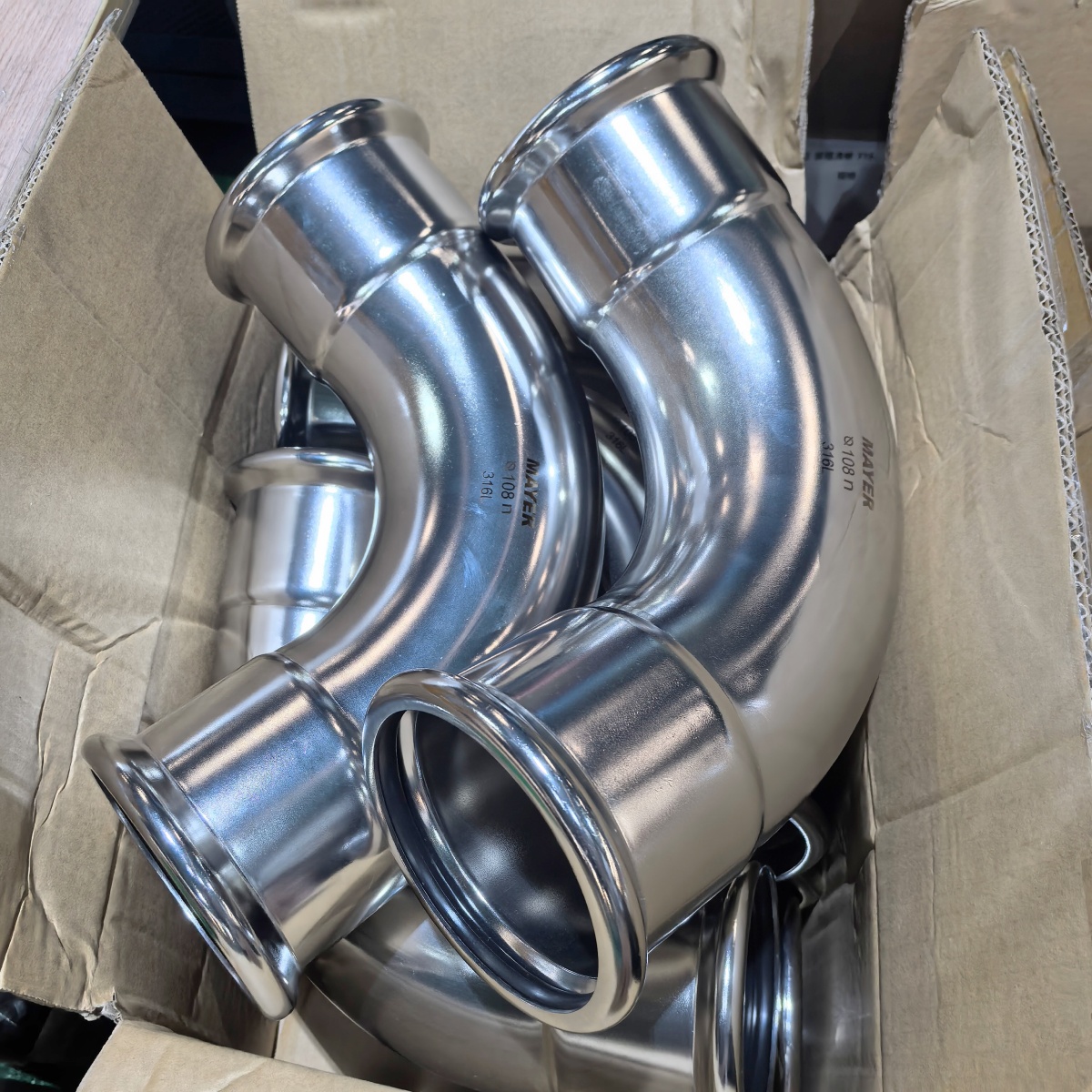
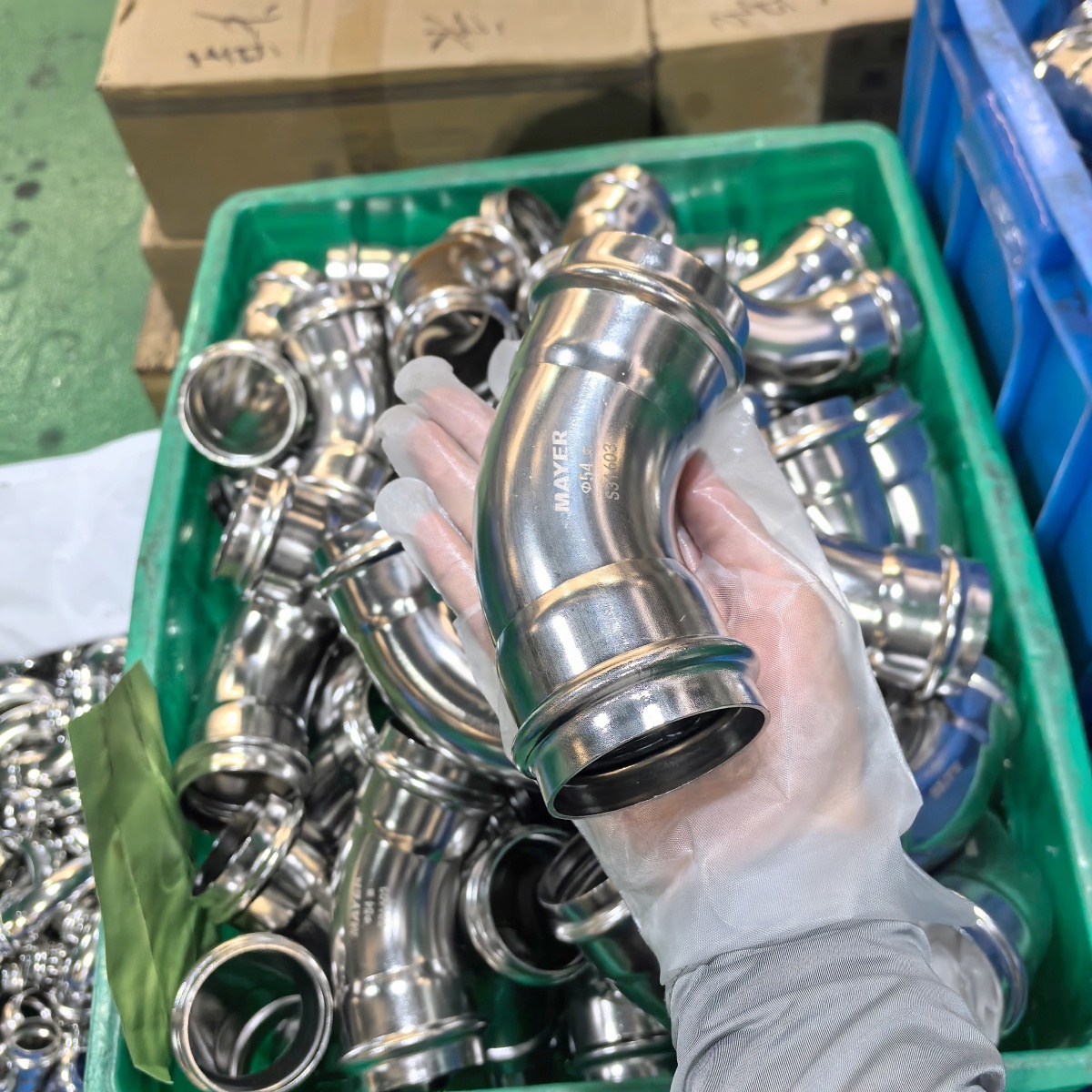
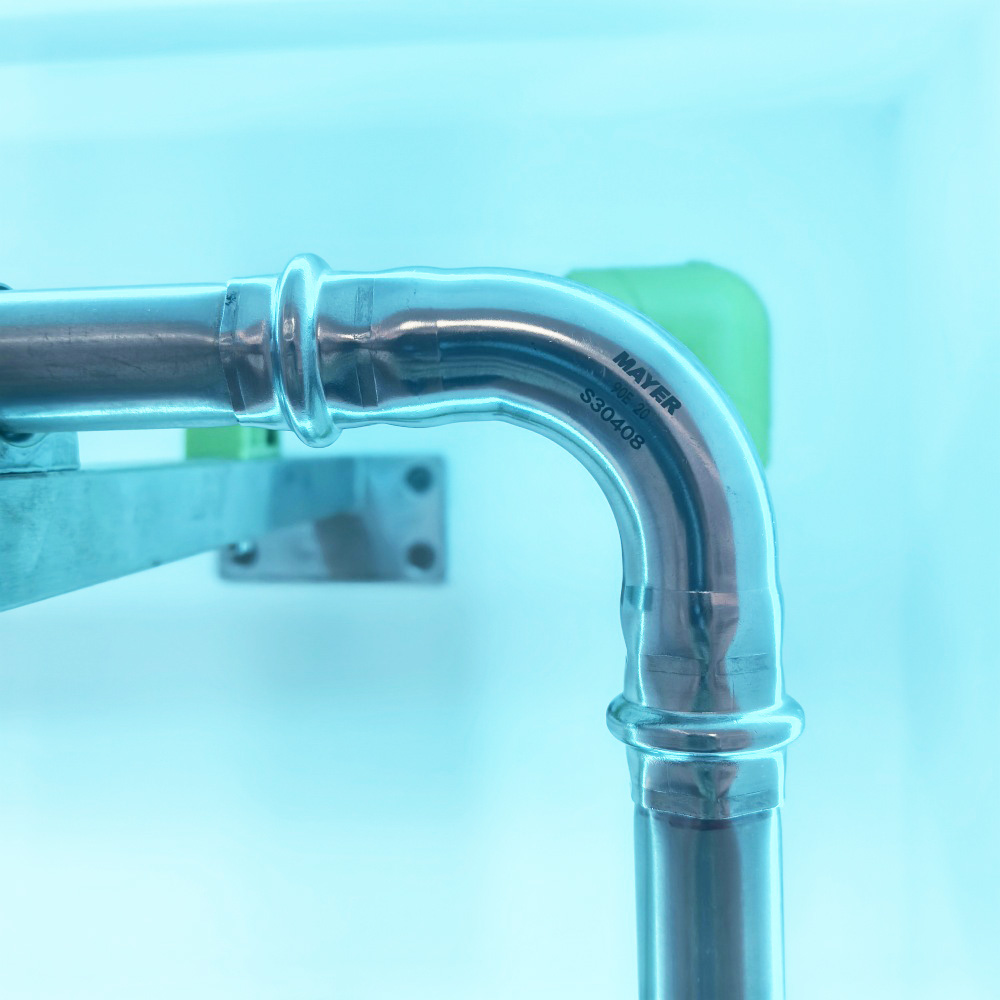
Key Advantages of Stainless Steel Double Press 90° Elbows
1. Excellent Corrosion Resistance
Manufactured from stainless steel grades such as 304 or 316L, the fitting can be selected according to different application requirements. 304 stainless steel is suitable for general water supply and building piping systems, while 316L stainless steel is preferred for environments requiring higher corrosion resistance.
2. Double Press Connection
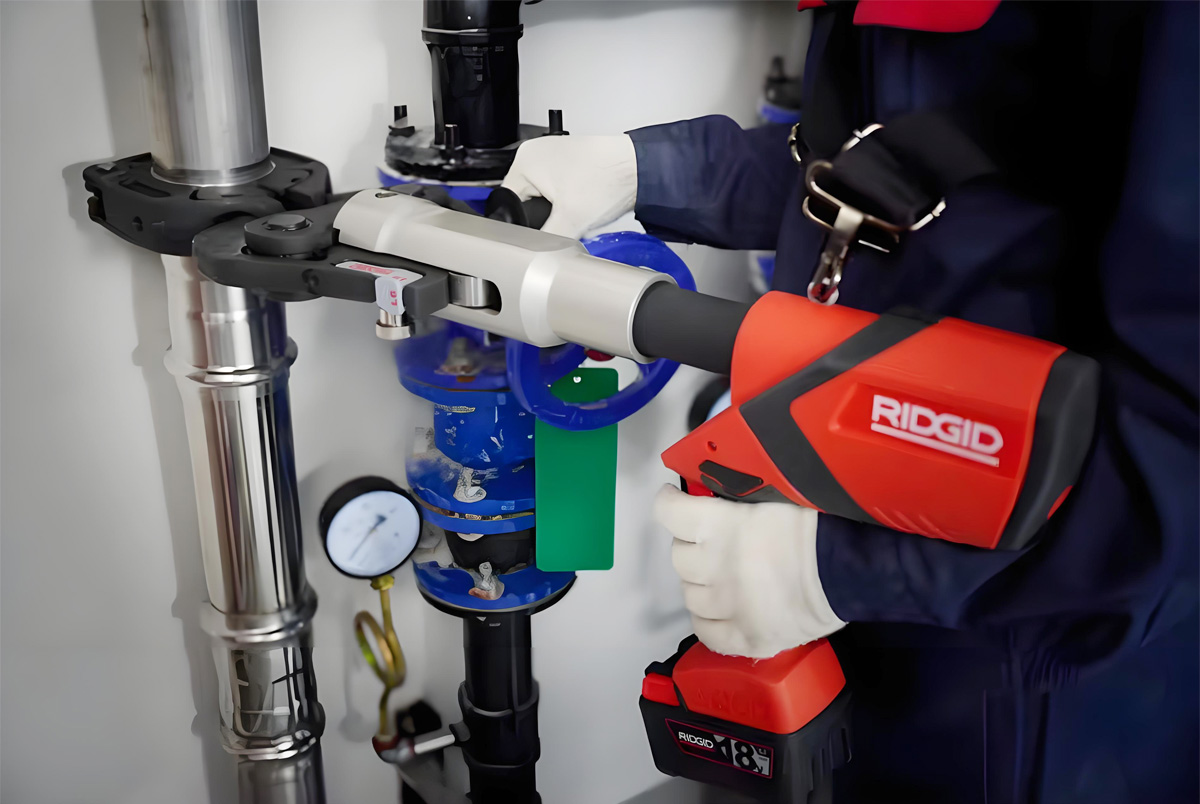
The double press design creates secure mechanical connections on both sides of the fitting, helping improve connection stability and supporting efficient installation in large-scale projects.
3. Efficient Installation
The connection can be completed using dedicated pressing tools without traditional welding, helping reduce installation time and simplify on-site construction.
4. Compact Design
The compact 90° elbow design is suitable for piping installations with limited space and helps engineers create more efficient pipe layouts.
5. Good Hygienic Performance
Stainless steel provides a smooth internal surface that helps minimize the accumulation of contaminants and is suitable for water supply systems with high hygiene requirements.
6. Long Service Life
Stainless steel offers excellent strength, corrosion resistance, and durability. With proper material selection and installation, it can meet the requirements of long-term and stable piping system operation.
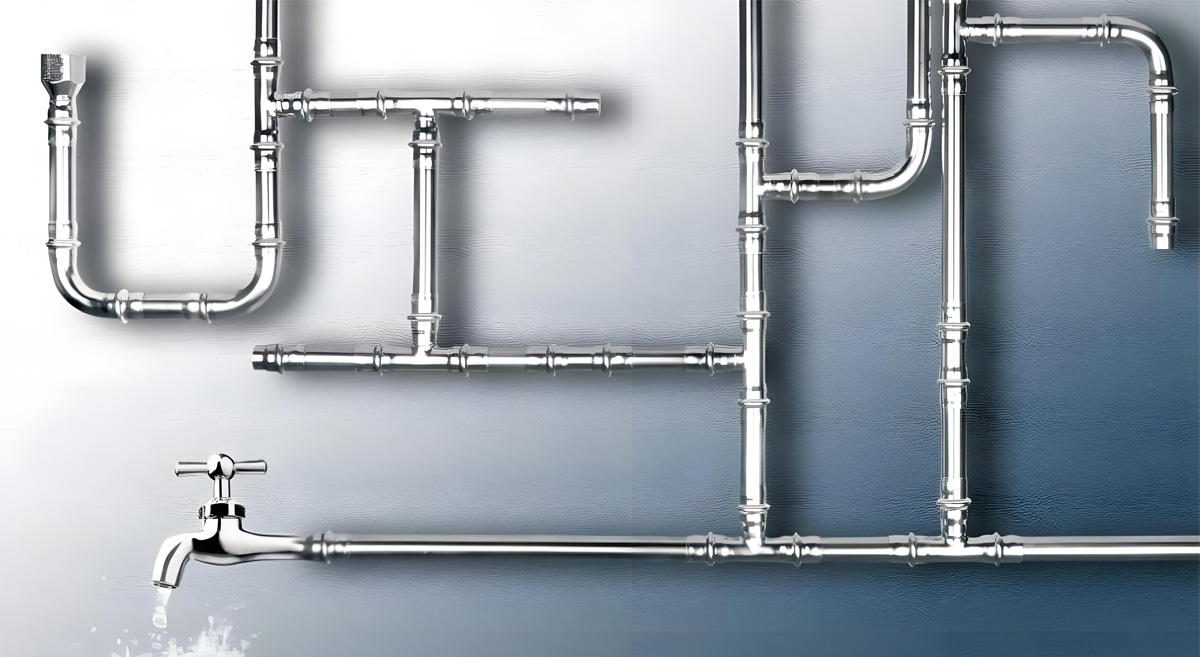
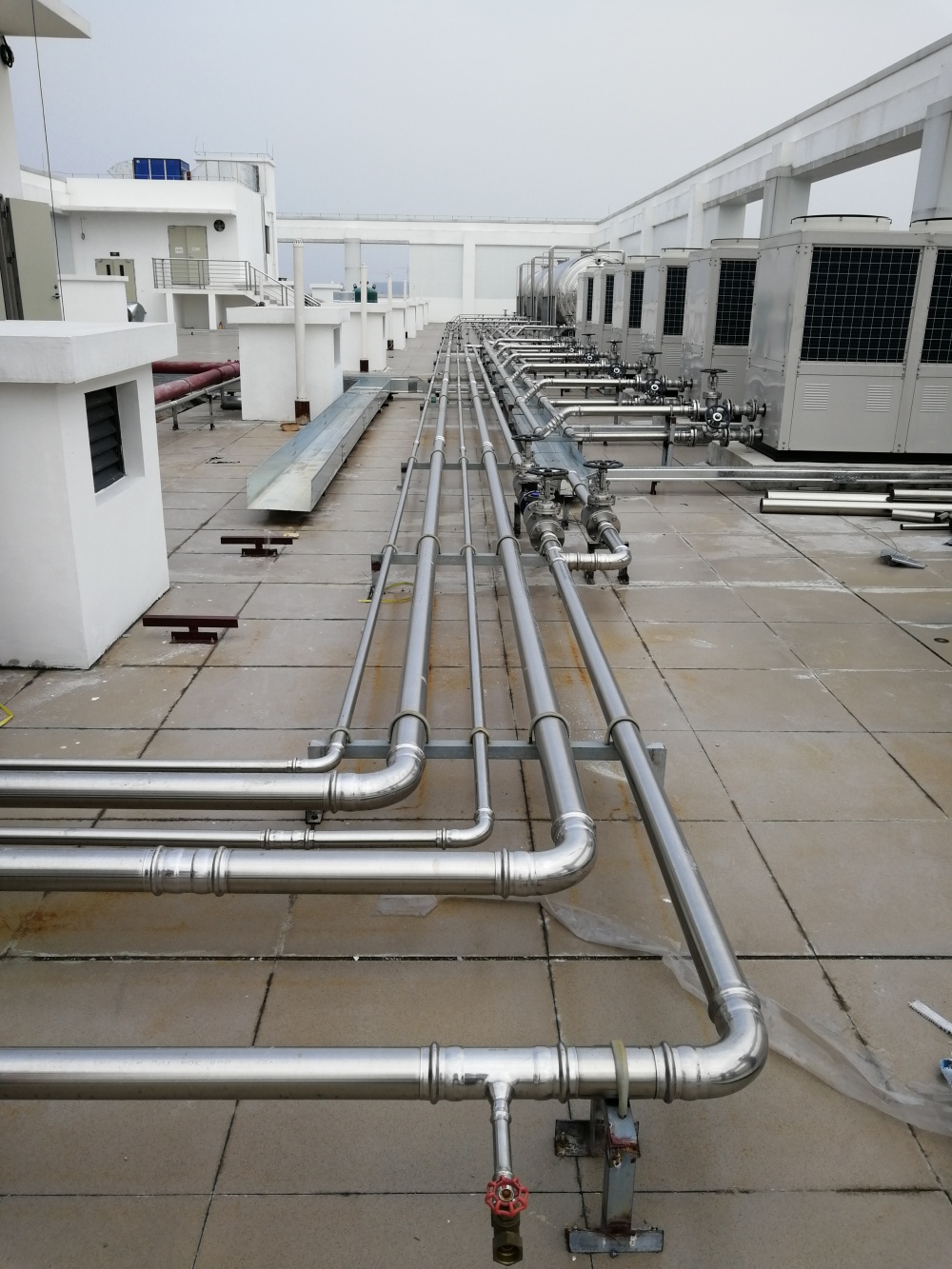
304/316L Stainless Steel Pipes and Fittings for Water Supply
Application of 304/316L Stainless Steel Pipes and Press Fittings
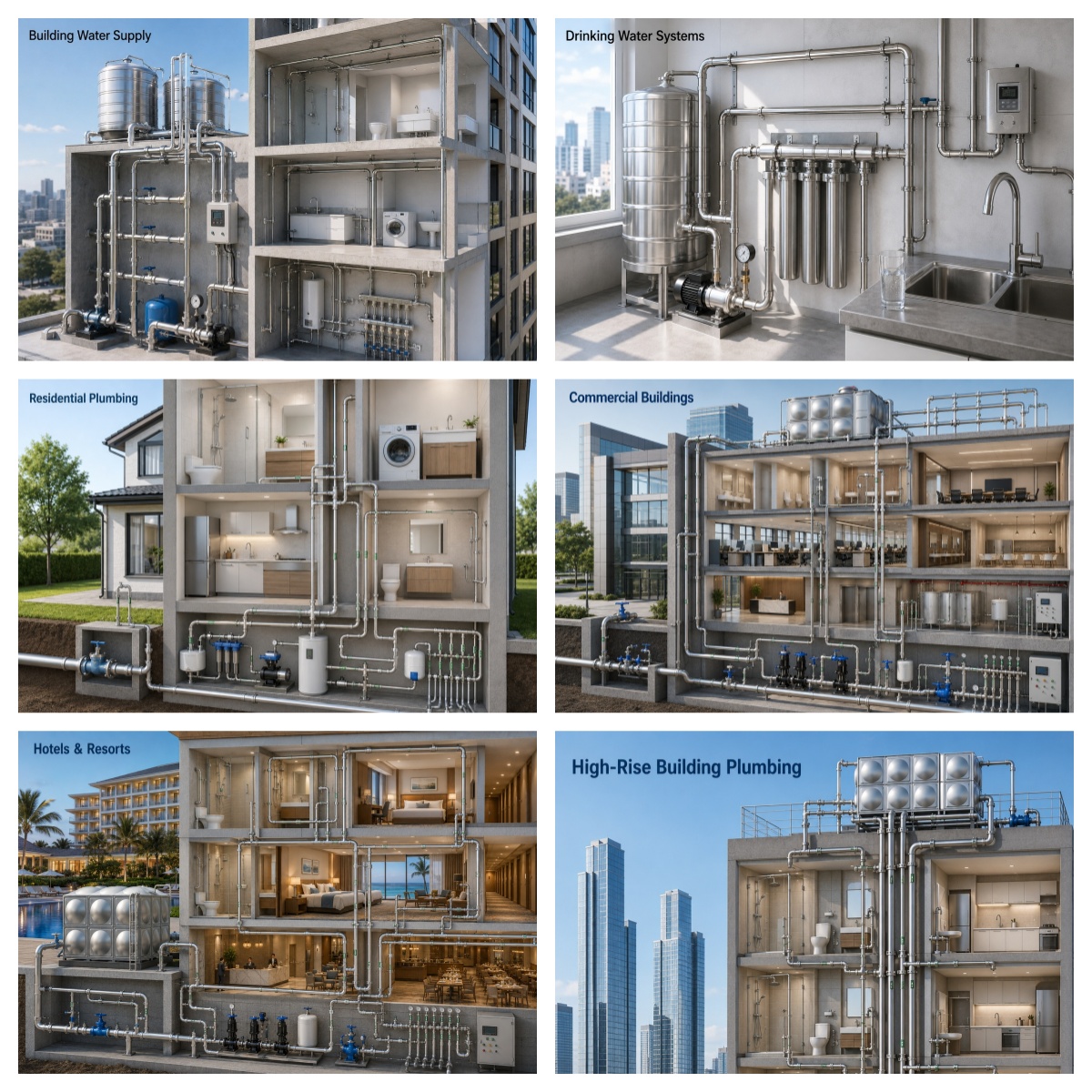
1. Building Water Supply Systems
Stainless steel double press 90° elbows are widely used in hot and cold water piping systems in residential buildings, commercial buildings, offices, hotels, and other facilities to change pipe direction.
2. Potable Water Supply Systems
Due to the corrosion resistance and hygienic properties of stainless steel, double press 90° elbows are suitable for potable water distribution and related water supply piping systems.
3. Hotels and Commercial Buildings
Hotels, shopping centers, office buildings, and other large facilities often have complex water distribution networks. Stainless steel double press elbows help route pipes around building structures and provide flexible installation solutions.
4. Hospitals and Healthcare Facilities
Hospital water supply systems have high requirements for hygiene, reliability, and durability. Stainless steel pipes and double press fittings can be used in water supply piping systems for hospitals and healthcare facilities.
5. Food and Beverage Industry
Stainless steel offers good hygienic and corrosion-resistant properties, making stainless steel pipes and double press fittings suitable for piping systems in certain food, beverage, and processing facilities.
6. Industrial Piping Systems
In industrial plants, equipment connections, and process piping systems, stainless steel double press 90° elbows can be used to change pipe direction and connect different equipment and piping sections.
7. HVAC Systems
In certain HVAC, chilled and hot water circulation, and equipment connection systems, 90° elbows help change pipe direction and create more compact piping layouts.





 Click Here