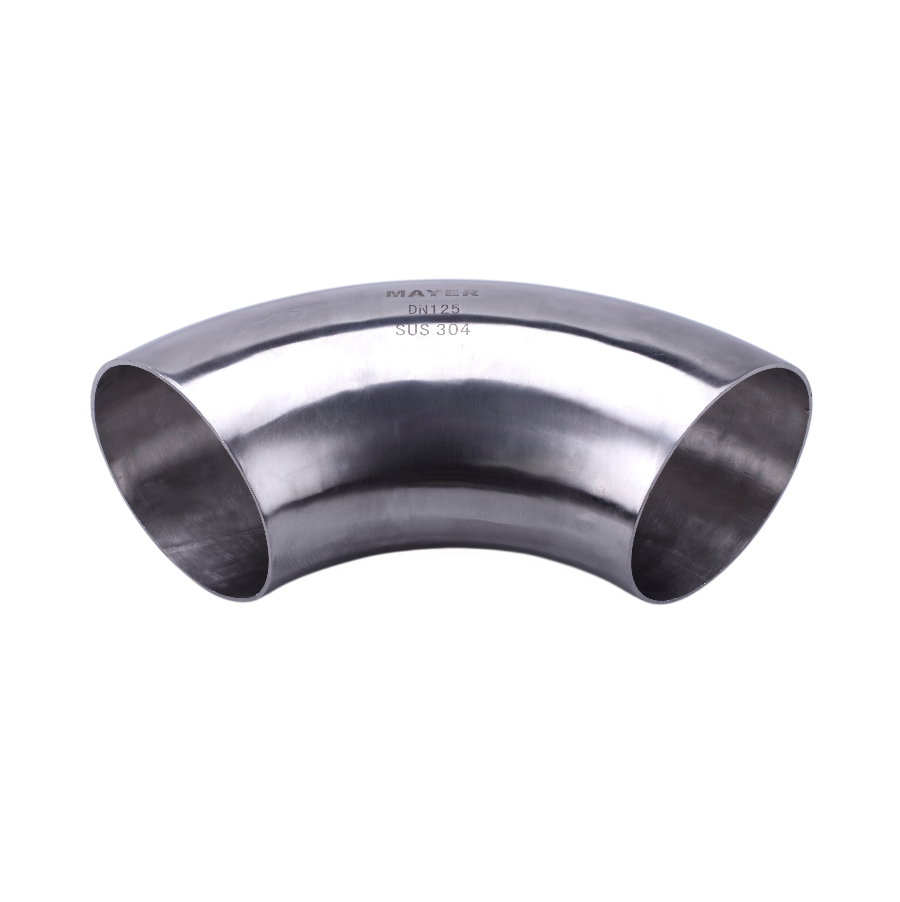
 304 Stainless Steel Welded Fittings
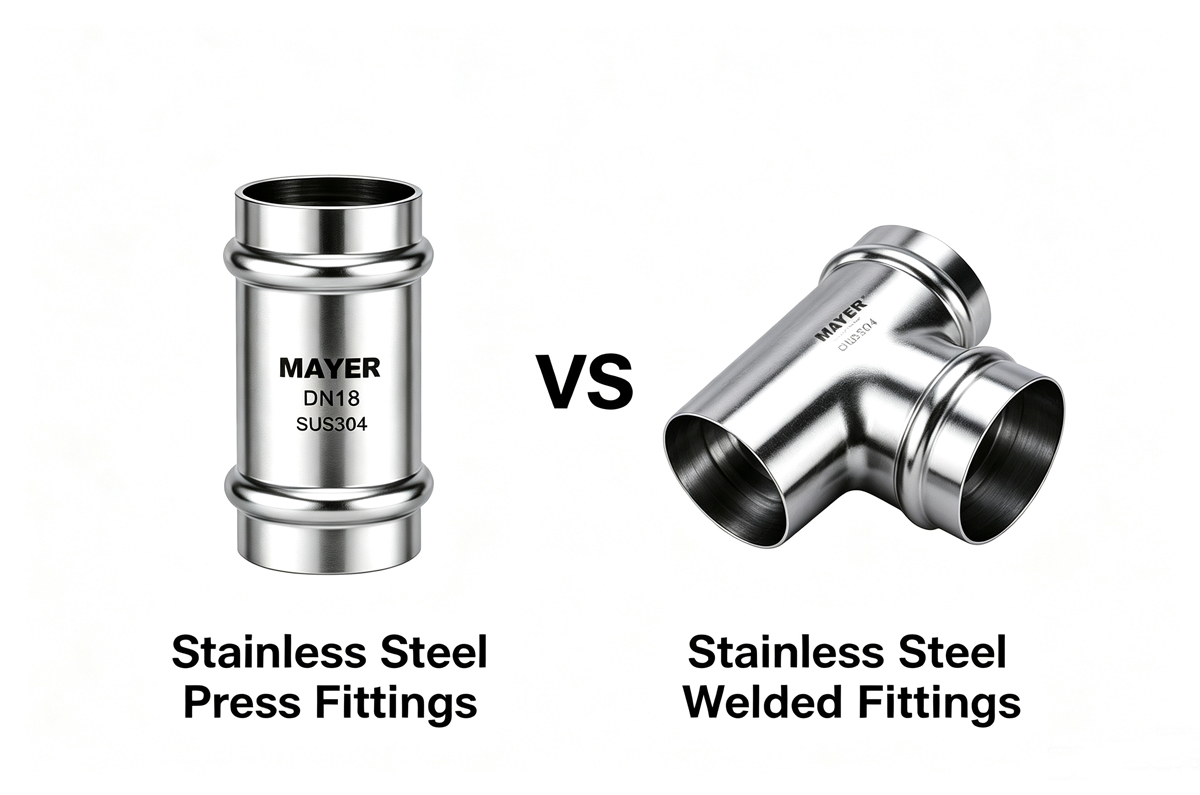
Key Differences Between Stainless Steel Press Fittings and Stainless Steel Welded Fittings
1. Different Installation Methods
One of the biggest advantages of Stainless Steel Press Fittings is their simple and efficient installation process.
Installers only need to cut the pipe, remove burrs, insert the pipe into the fitting, and complete the connection using a professional hydraulic press tool. The entire installation typically takes only a few seconds.
In contrast, Stainless Steel Welded Fittings require skilled welders to perform the welding process. Installation takes longer and requires welding equipment, shielding gas, and post-weld treatments.
For large commercial buildings, a Press Fitting System can significantly reduce installation time and shorten the overall project schedule.
2. No Open Flame Required
A key advantage of press fitting systems is that they require no welding and no open flame.
This makes them a safer choice for occupied buildings such as hospitals, hotels, schools, shopping malls, and office buildings, where welding sparks could disrupt operations or create fire hazards.
By comparison, welded fittings require electric arc or flame welding, meaning construction sites must implement strict fire safety measures and hot-work permits.
3. Installation Efficiency
Installation efficiency is one of the most significant differences between these two connection methods.
A Stainless Steel Press Fitting System can typically improve installation efficiency by 30% to 70% compared with traditional welding methods.
For DN15–DN100 thin-wall stainless steel water supply systems, a single installation crew can complete hundreds of pipe connections per day.
Each welded joint, however, usually requires several additional steps:
· Pipe alignment
· Tack welding
· Final welding
· Weld cleaning
· Pickling and passivation
· Weld inspection
As a result, welded installations generally require considerably more labor and construction time.
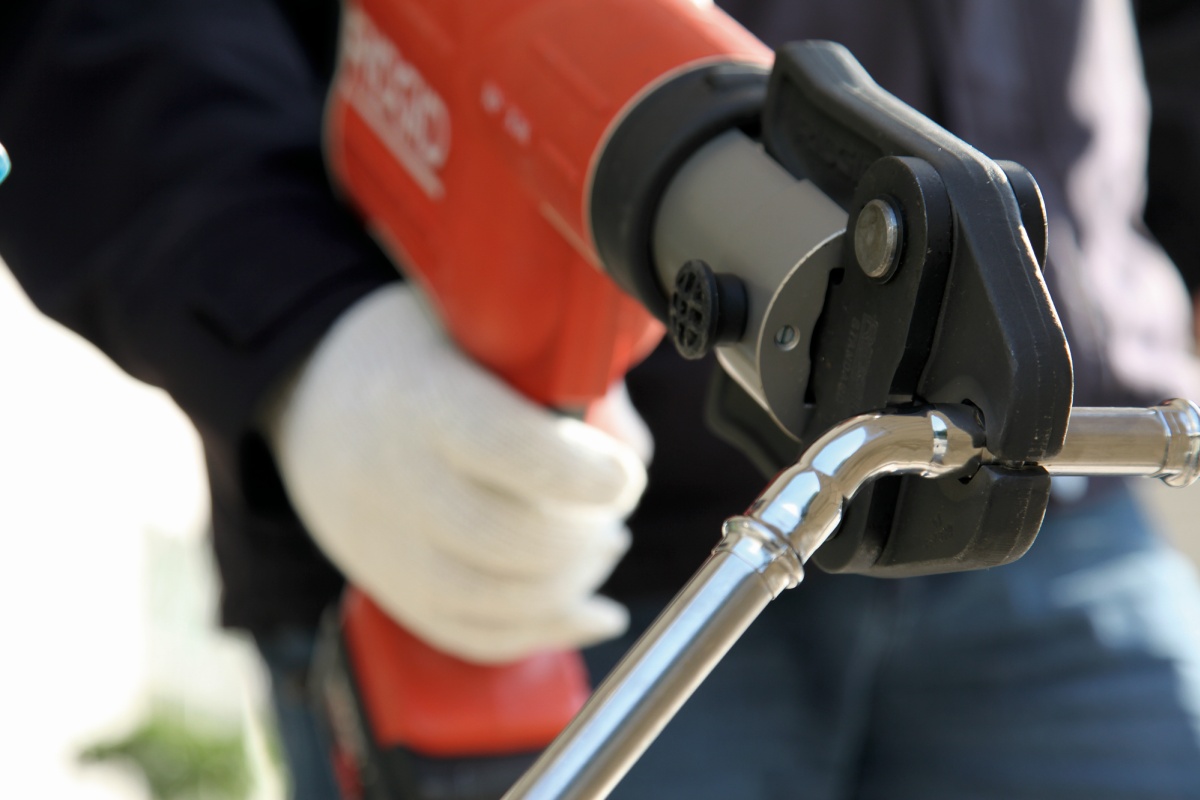 Stainless Steel Crimped Pipe Fittings Clamping Installation
4. Maintenance and Future Modifications
Press fittings use EPDM or FKM sealing rings, providing long-term, reliable leak-proof performance.
If the piping system needs to be expanded or modified in the future, installers can simply add new fittings and complete additional press connections quickly.
A welded piping system, however, must be cut, re-welded, and treated again, making maintenance, repairs, and future modifications more time-consuming and costly.
5. Cost Comparison
Many buyers initially believe that Stainless Steel Press Fittings are more expensive because of their higher unit price.
However, when evaluating the total project cost, it is important to consider factors such as:
· Labor costs
· Installation time
· Professional welder expenses
· Downtime and project delays
· Long-term maintenance costs
For these reasons, large commercial construction projects often prefer Stainless Steel Press Fittings, as they help reduce overall installation costs and accelerate project completion.
Industrial projects, on the other hand, typically place greater emphasis on high-pressure performance, elevated temperature resistance, and long-term structural integrity. Therefore, Stainless Steel Welded Fittings remain the preferred solution for many industrial piping systems.
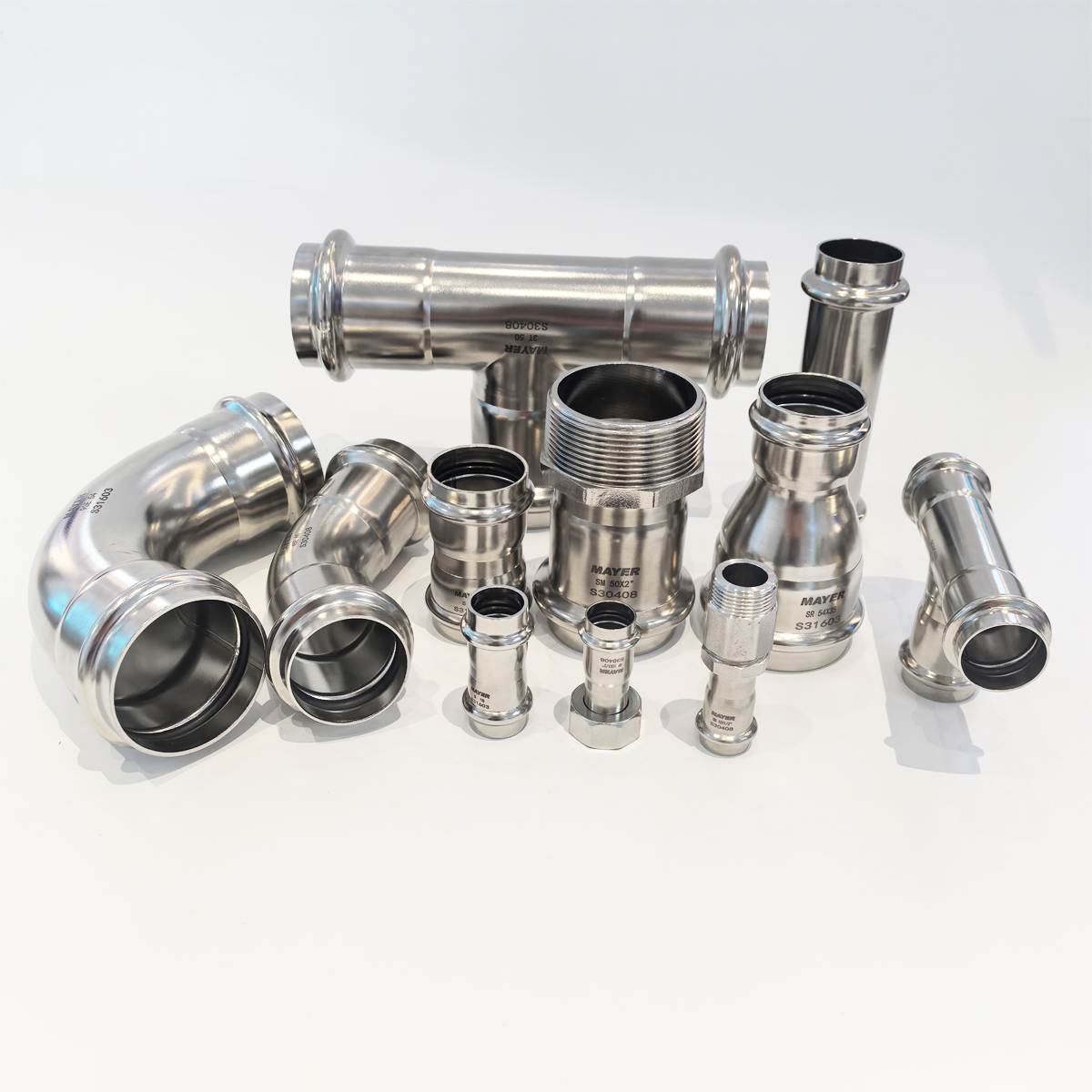
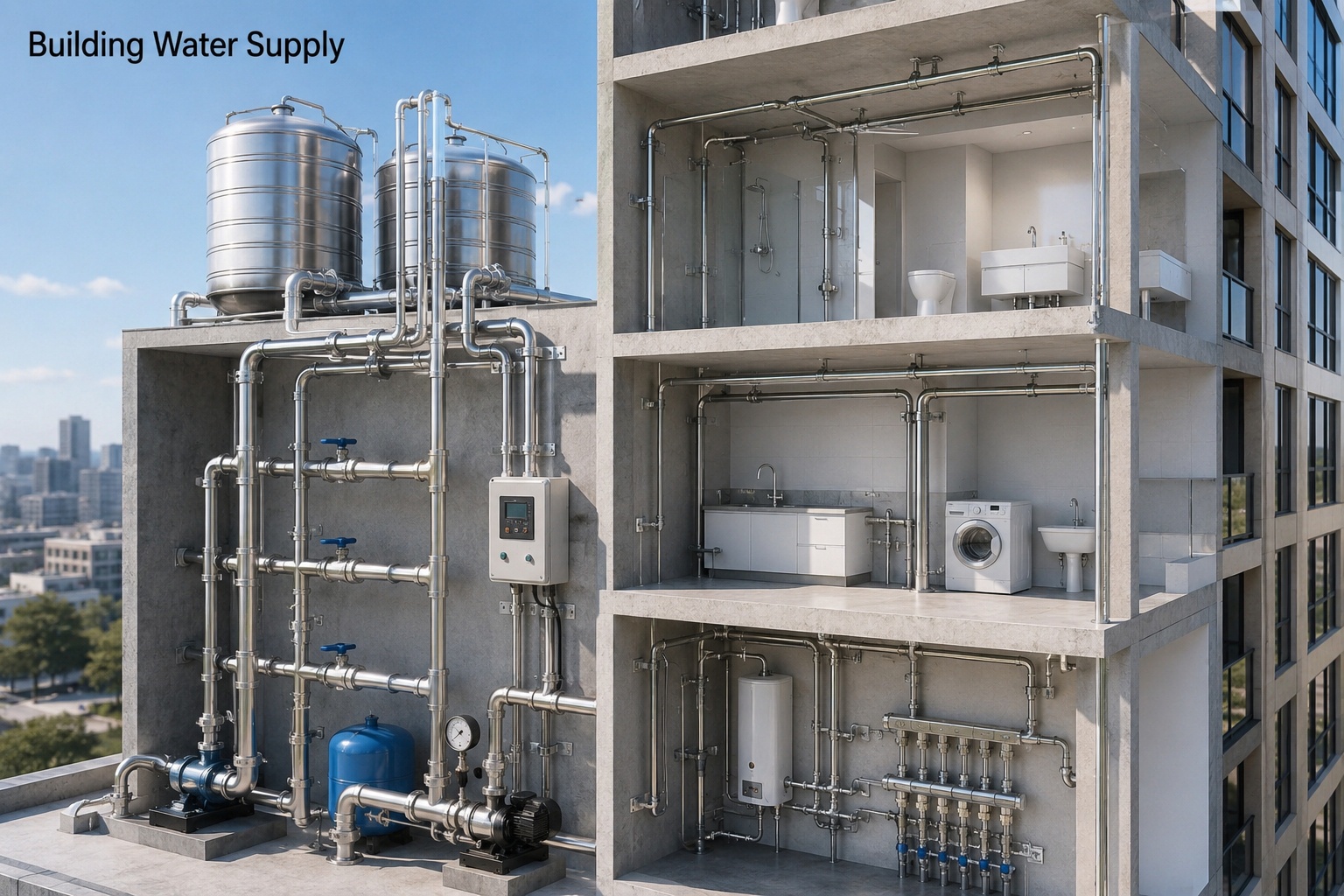 Stainless Steel Press Fittings for Building Water Supply
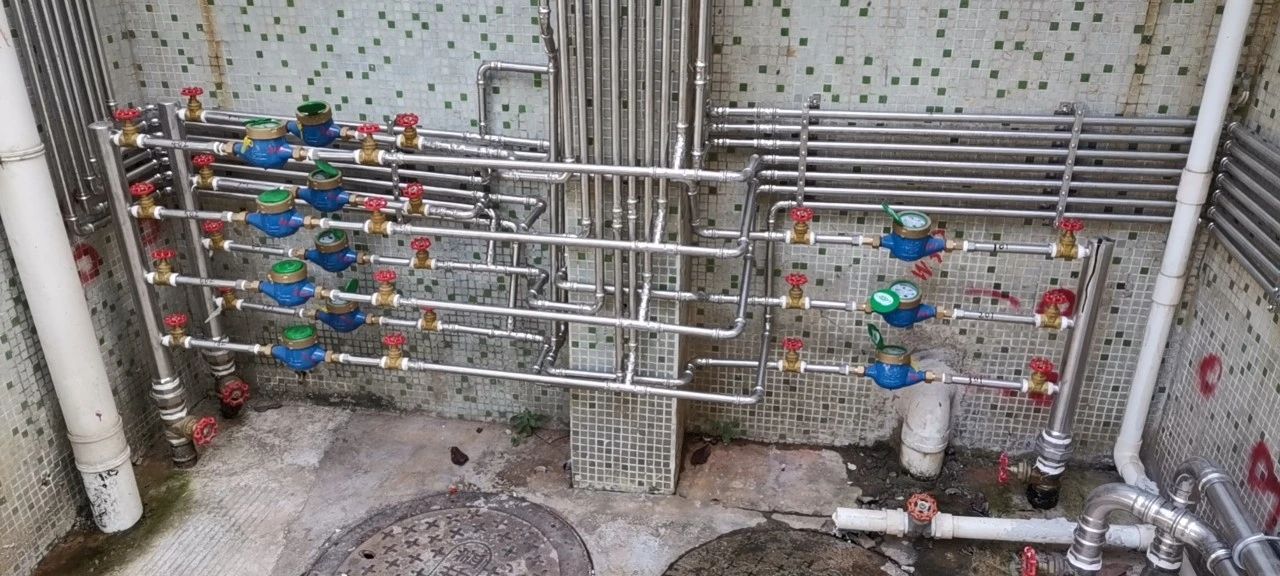 Stainless Steel Press Fittings for Water Supply
Main Applications of Stainless Steel Press Fittings
1. Commercial Buildings
Stainless Steel Press Fittings are widely used in commercial complexes, office buildings, shopping malls, and other commercial facilities.
The main reasons include:
· Fast and efficient installation
· Minimal disruption to other construction trades
· No welding or open flame required
· Easy maintenance and future system expansion
· Complies with potable water hygiene standards
2. Hospitals
Hospitals have extremely strict hygiene and safety requirements.
A Stainless Steel Press Fitting System minimizes construction contamination and eliminates welding fumes, making it ideal for healthcare environments.
In addition, 304 and 316L stainless steel water supply systems offer excellent corrosion resistance and help reduce the risk of bacterial growth, making them an increasingly popular choice for modern hospital plumbing systems.
3. Hotels
Hotel projects are typically built under tight construction schedules.
Using a Press Fitting System significantly shortens installation time, helping projects meet delivery deadlines more efficiently.
Furthermore, when hotels undergo future renovations or system upgrades, press-fit piping systems are easier and faster to modify than welded systems.
4. High-Rise Residential Buildings
Modern residential and high-rise apartment buildings increasingly use Thin Wall Stainless Steel Pipe together with Stainless Steel Press Fittings.
The key advantages include:
· Long service life
· Excellent corrosion resistance with no rust
· Safer and cleaner drinking water quality
· High installation efficiency
5. Municipal Water Supply Systems
Many municipal water supply projects around the world have begun adopting 304 and 316L Stainless Steel Press Fitting Systems.
The primary reasons are:
· Outstanding corrosion resistance
· Low leakage rates
· Service life of more than 50 years
· Reliable long-term performance with minimal maintenance
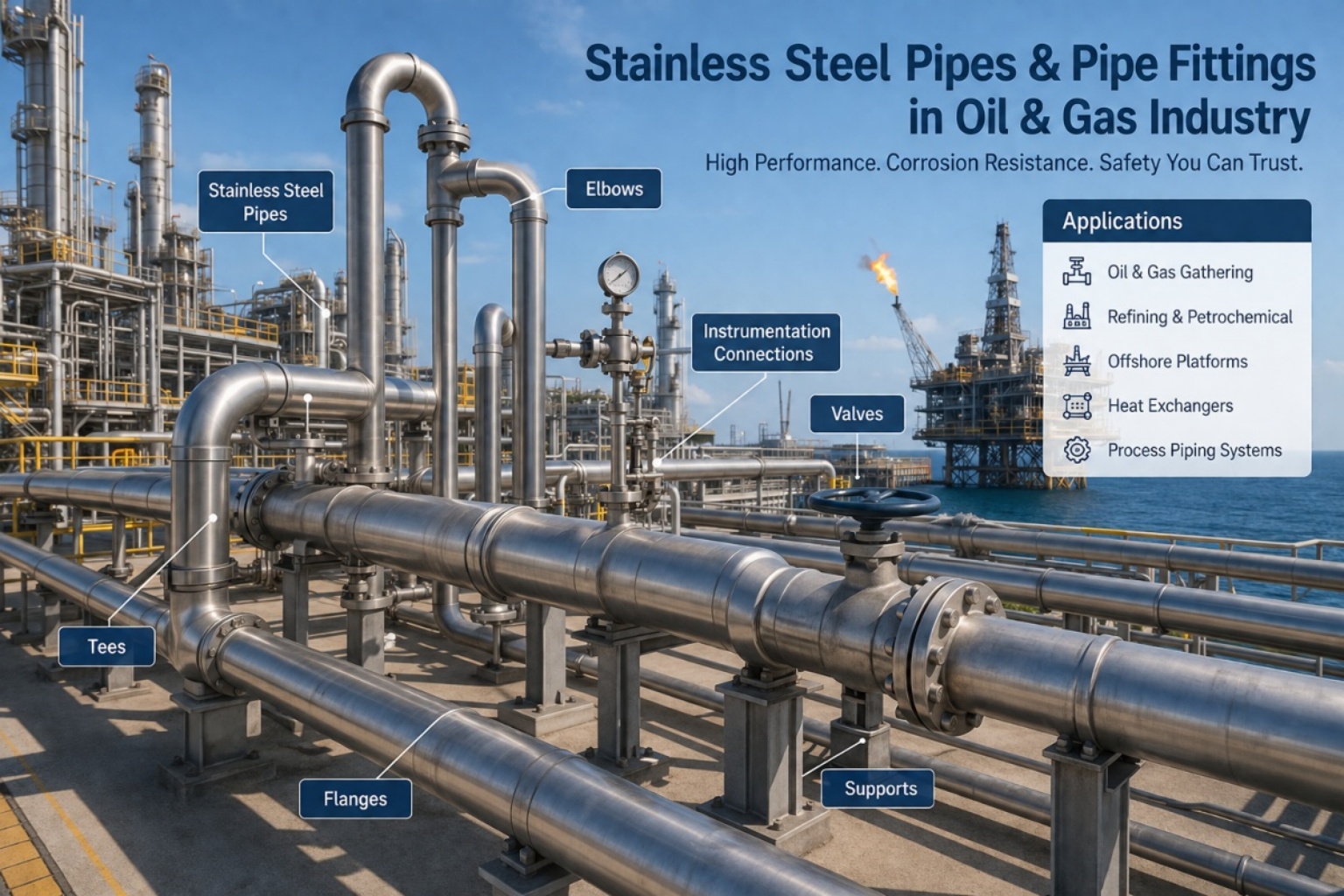 Stainless Steel Welded Fittings for Oil & Gas Industry
Main Applications of Stainless Steel Welded Fittings
1. Food Processing Industry
Food processing plants require piping systems that can operate continuously with minimal downtime.
Stainless Steel Welded Fittings create a permanent, integral connection that is highly resistant to loosening under long-term operation. They also support CIP (Clean-in-Place) cleaning processes, making them the preferred choice for hygienic food production facilities.
2. Pharmaceutical Industry
Pharmaceutical manufacturing facilities typically use 316L Stainless Steel Welded Piping Systems to meet strict sanitary standards.
The main advantages include:
· Smooth internal pipe surface
· Polished weld seams for enhanced cleanliness
· Compliance with stringent hygienic regulations
· Reduced risk of bacterial growth and contamination
3. Chemical Industry
Chemical processing systems often transport highly corrosive media under demanding operating conditions.
Stainless Steel Welded Fittings provide greater mechanical strength and are better suited for high-temperature, high-pressure, and corrosive fluid applications.
As a result, 316L Stainless Steel Pipe Fittings are widely used in chemical plants and process piping systems.
4. Oil & Gas Industry
Piping systems in the Oil & Gas Industry are typically required to withstand extremely high operating pressures and harsh service environments.
For this reason, welded connections are the preferred solution for critical industrial applications.
Commonly used products include:
· Stainless Steel Butt Weld Fittings
· Schedule Stainless Steel Pipe
· Industrial Stainless Steel Pipe
These products provide the strength, reliability, and long-term durability required for continuous operation in demanding oil and gas facilities.
5. Industrial Process Piping
Industrial production lines often operate under conditions involving:
· High temperatures
· High pressures
· Continuous operation
Because welded joints provide superior structural strength and long-term integrity, Stainless Steel Welded Fittings have become the preferred connection method for industrial process piping systems across a wide range of manufacturing industries.
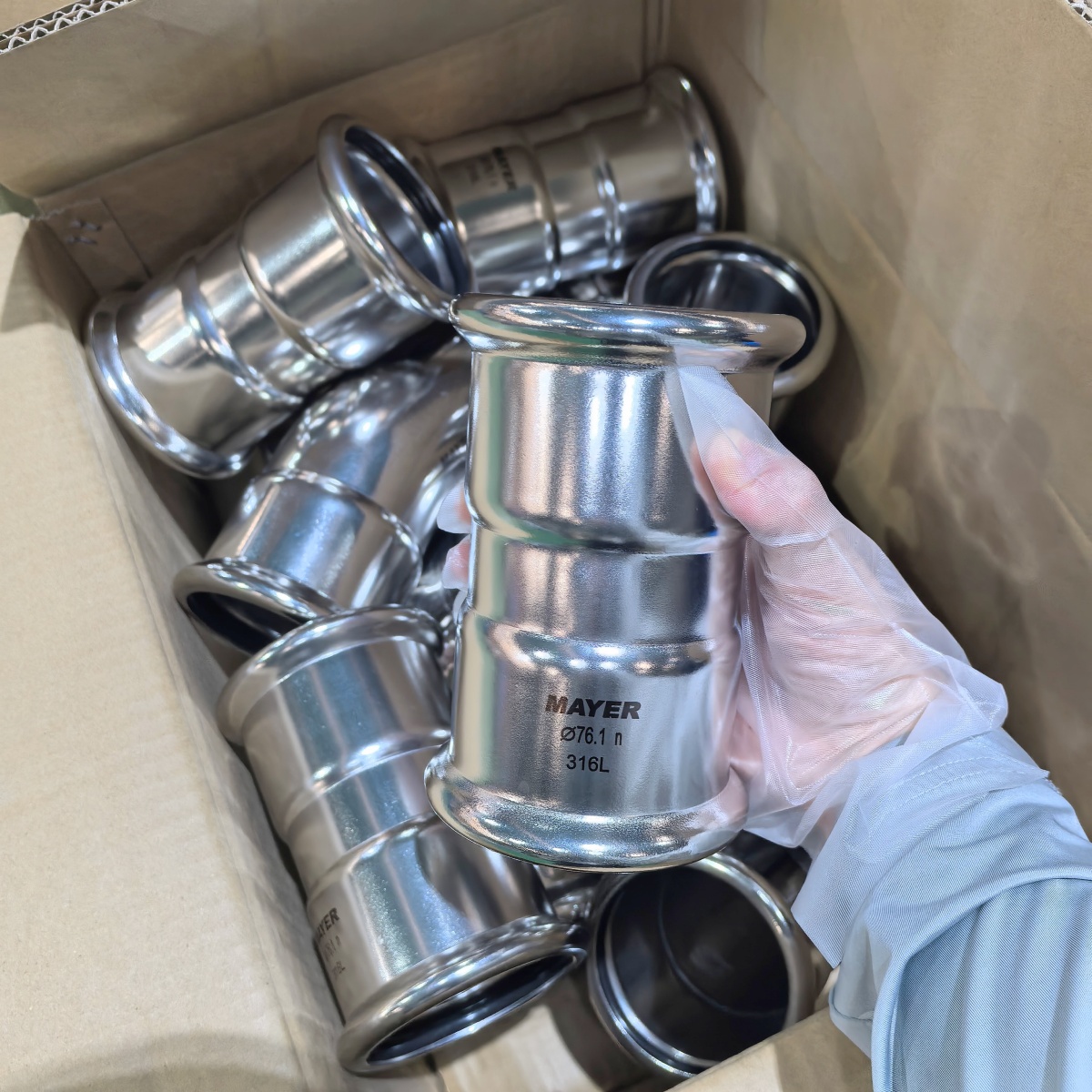 316L Staiinless Steel Press Fittings M Profile
Why Do Commercial Buildings Prefer Press Fittings While Industrial Projects Prefer Welded Fittings?
Different applications have different priorities, which is why they require different pipe connection methods.
For commercial buildings, residential developments, hospitals, hotels, and municipal water supply projects, installation efficiency, safety, and ease of maintenance are often more important than maximum pressure resistance. Stainless Steel Press Fittings require no welding and no open flame, allowing for fast installation while reducing construction time, labor costs, and disruption to occupied buildings. As a result, press fitting systems have become the preferred connection solution for modern building plumbing and potable water systems.
In contrast, industries such as food processing, pharmaceuticals, chemical processing, oil & gas, and industrial process piping place greater emphasis on continuous operation, high temperatures, high pressures, and the transportation of aggressive or corrosive media. Stainless Steel Welded Fittings create a permanent, integral connection with superior structural strength, enabling piping systems to maintain reliable performance under demanding operating conditions. Therefore, welded fittings remain the preferred choice for industrial applications.
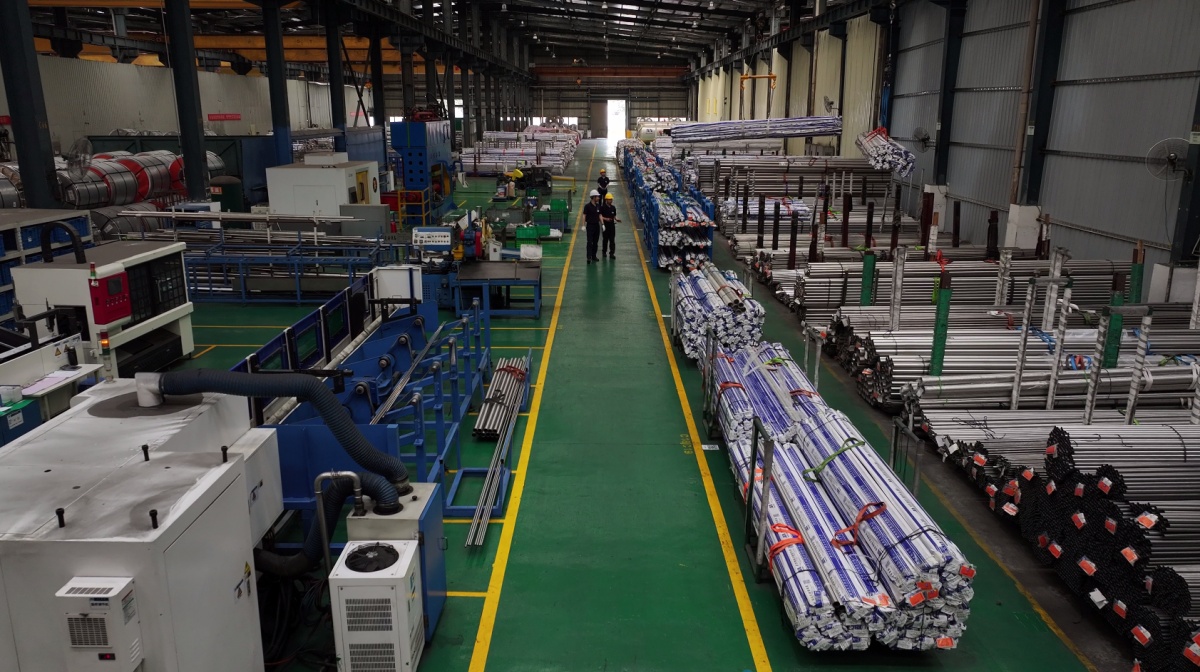
Our Stainless Steel Pipe Workshop
How to Choose the Right Stainless Steel Pipe Fittings
If your project involves Potable Water Systems, Commercial Plumbing Systems, hospitals, hotels, residential buildings, or municipal water supply networks, Stainless Steel Press Fittings are generally the recommended solution. They offer fast installation, high safety, reliable sealing performance, and low maintenance requirements, making them especially suitable for modern plumbing systems using Thin Wall Stainless Steel Pipe.
If your project is in the food processing, pharmaceutical, chemical, energy, oil & gas, or high-pressure industrial sectors, Stainless Steel Welded Fittings are typically the better choice. Their superior structural strength and permanent welded joints are designed to withstand continuous operation, high temperatures, high pressures, and harsh industrial environments.
For global buyers selecting 304 Stainless Steel Pipe Fittings or 316L Stainless Steel Pipe Fittings, the decision should not be based solely on the product price. It is equally important to evaluate the installation efficiency, total construction cost, maintenance requirements, service life, and project specifications. Choosing the connection method that best matches the application's operational requirements will maximize return on investment while ensuring long-term reliability, safety, and performance of the piping system.