1. Introduction
The water treatment field is one of the core components of modern infrastructure construction, covering the entire chain from raw water intake, purification treatment, transmission and distribution, to wastewater recycling and reuse. In this system, the piping system undertakes the critical function of medium transportation, and the selection of pipe materials directly affects water quality safety, system lifespan, and operation and maintenance costs. Among numerous pipe material options, 304/316L stainless steel welded pipes and pipe fittings have become the mainstream choice in the water treatment industry due to their outstanding comprehensive performance.
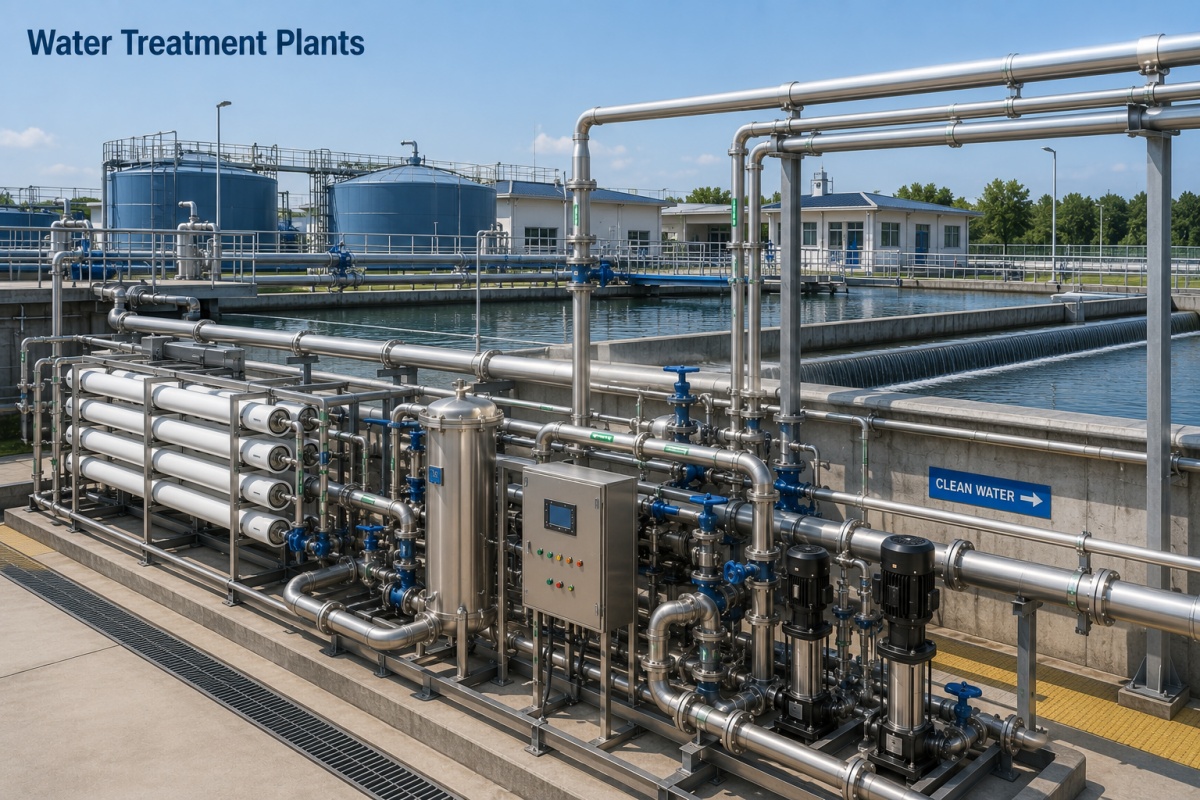
304/316L Stainless Steel Pipes and Fittings for Water Treatment Plants
2. Where are stainless steel pipes and fittings needed in the water treatment field?
The demand for stainless steel pipes and fittings in the water treatment field covers the entire chain from source to tap. Specifically, it mainly includes the following core application scenarios:
2.1 Municipal Water Supply & Potable Water Systems
Municipal tap water transmission pipelines, connection pipes for secondary water supply equipment, and internal water supply lines in buildings are among the most widely used scenarios for stainless steel pipes. 304 stainless steel pipes are commonly used in cold and hot water pipes and drinking water purification pipes. Thin-wall stainless steel pipes have been widely applied in building water supply due to their good corrosion resistance, recyclability, and pollution-free characteristics.
2.2 Wastewater Treatment
Equipment pipelines in wastewater treatment plants are long-term exposed to corrosive chemicals and gases, demanding extremely high corrosion resistance from pipe materials. 304 and 316L stainless steels have become the main standard materials in municipal wastewater treatment equipment. 316L stainless steel, with its ability to resist sulfides, chlorides, and other complex corrosive substances, is widely used in corrosive wastewater transmission pipelines in treatment plants.
2.3 Desalination Plants
Desalination is an important application field for 316L stainless steel. Because seawater contains high concentrations of chloride ions, it requires extremely high pitting resistance and crevice corrosion resistance from pipe materials. 316L stainless steel, due to its molybdenum content, exhibits excellent corrosion resistance in saline environments and is widely used in the core piping systems of desalination plants.
2.4 High-Purity Water Systems
In pharmaceutical, electronics, food and beverage industries, the transmission pipelines for purified water and Water for Injection (WFI) have extremely strict requirements on materials. Purified water pipelines mostly use 304L or 316L stainless steel, and the design and installation must avoid dead ends and blind pipes, often using circulating loops. The ASME BPE guidelines recommend priority use of 316L stainless steel in high-purity water treatment systems.
2.5 Reclaimed Water / Water Reuse Systems
Reclaimed water transmission pipelines also face the problem of ionic corrosion in water quality. Research shows that chloride ions in reclaimed water are the main factor causing stainless steel corrosion, and at low concentrations, stainless steel can effectively resist chloride ion attack. 304 stainless steel is widely used in clear water transmission pipelines in reclaimed water treatment systems.
2.6 Pharmaceutical & Food and Beverage Industry
The pharmaceutical and food and beverage industries have extremely high hygienic standards for pipelines. 304/316L stainless steel pipes are widely used for conveying purified water, mineral water, beverages, dairy products, and other media due to their zero chemical leaching, smooth inner walls, and low scaling tendency. 316L, containing molybdenum, has stronger resistance to chloride and acid corrosion, making it more suitable for fruit juices, carbonated drinks, and electrolyte-containing beverages.
2.7 Cooling Water & Heat Exchangers
Circulating cooling water systems and heat exchanger pipelines in industrial facilities such as power plants and chemical plants are in long-term contact with water media containing various chemicals, imposing high requirements on corrosion resistance and thermal conductivity of pipe materials.
2.8 Marine & Coastal Facilities
Water supply pipelines and ship piping systems in coastal areas are long-term exposed to high salt-spray environments, requiring materials with stronger seawater corrosion resistance. 316L stainless steel has obvious advantages in this regard.
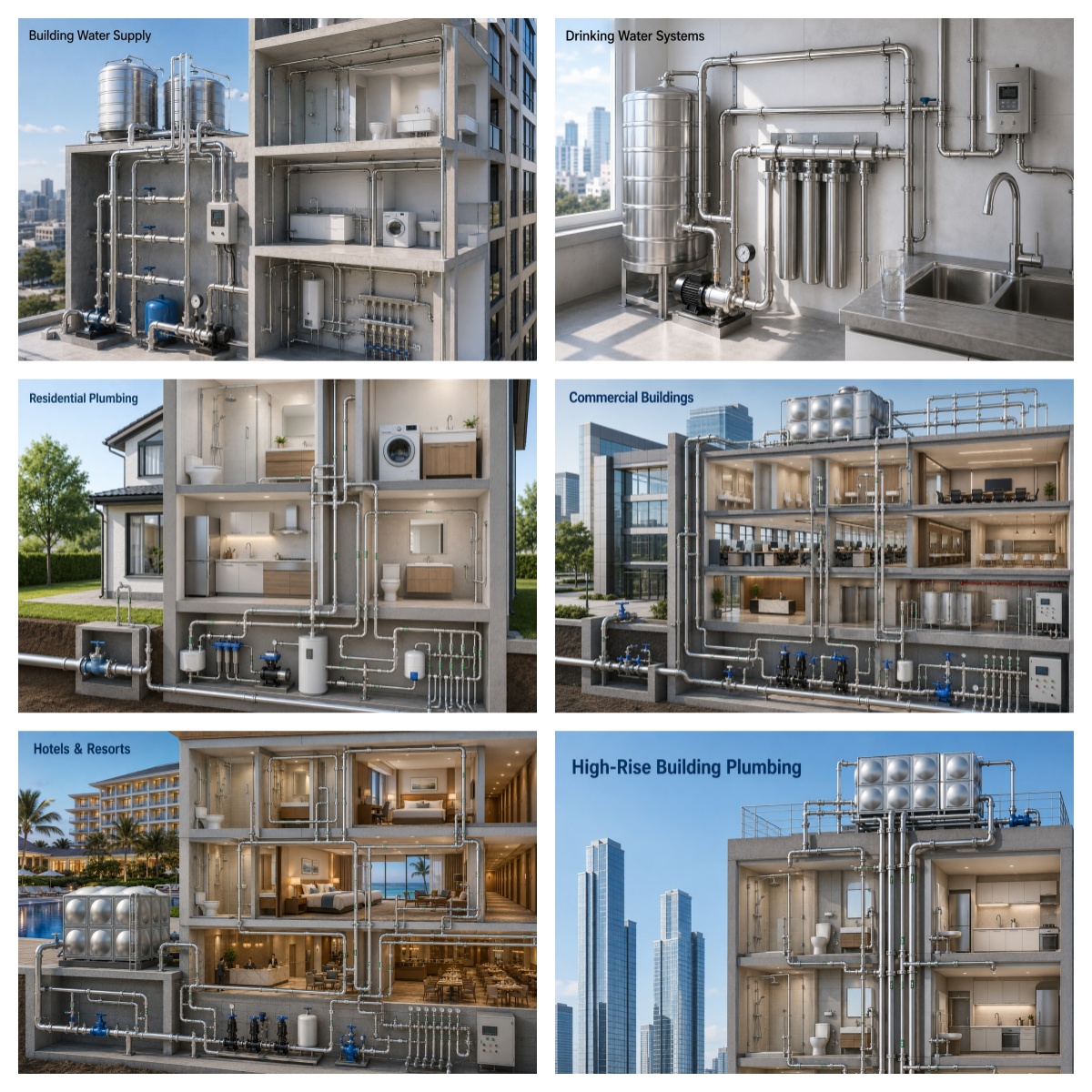
Application of 304/316L Stainless Steel Tubes and Fittings
3. Why choose 304/316L stainless steel welded pipes among numerous pipe materials?
There are many pipe material options in the water treatment field, including carbon steel, galvanized pipe, copper pipe, PPR plastic pipe, PVC pipe, composite pipe, etc. So why can 304/316L stainless steel welded pipes and fittings stand out?
3.1 Superior Corrosion Resistance
The reason stainless steel is "stainless" lies in the chromium element added to its chemical composition, which can form a dense oxide film on the surface for protection. 304 stainless steel contains about 18% chromium and 8% nickel (commonly known as "18/8 stainless steel"). 316L stainless steel adds 2-3% molybdenum on the basis of 304, and this key difference makes 316L far superior to 304 in chloride corrosion resistance.
Specifically, 304 stainless steel is suitable for water quality conditions with chloride content of about 200 ppm, while 316L stainless steel can be applied to water quality with chloride content up to 1000 ppm or even higher. The Pitting Resistance Equivalent Number (PREN) is a core indicator for measuring a material's resistance to chloride pitting – 304 has a PREN of about 18, while 316L reaches 23-25.
Compared with carbon steel and cast iron, 304 and 316L stainless steels show extremely excellent corrosion resistance in well water with residual chlorine content up to 2 ppm, with corrosion rates far lower than traditional materials. In municipal wastewater treatment, the weight-loss corrosion rates of 304 and 316 stainless steels are below 0.1 mils per year, and the effective service life of the material is at least over 20 years.
3.2 Ensure Water Quality Safety, Prevent Secondary Pollution
After a period of use, plastic water pipes suffer from severe secondary pollution on the inner wall, easily becoming a breeding ground for bacteria. Traditional galvanized pipes are very prone to rusting and corrosion, causing secondary pollution of water quality. Stainless steel pipes, with their zero chemical leaching characteristics, do not release harmful substances into water, have smooth inner walls that are not prone to scaling, and can effectively eliminate secondary pollution in pipelines.
The metal dissolution rate of stainless steel in drinking water is extremely low, and its protective surface oxide film ensures a very low general corrosion rate and minimal metal leaching. Nickel-containing stainless steels (304, 316L, etc.), with their corrosion resistance and hygienic cleanliness, can avoid harmful substance leaching without the need for linings or coatings, fully meeting WHO drinking water standards.
3.3 Long Service Life & Life Cycle Cost Advantage
The service life of 304/316L stainless steel water pipes can reach 70 years or even 100 years. In contrast, plastic pipes and galvanized pipes have much shorter service lives and require frequent maintenance and replacement.
Although the initial investment cost of stainless steel pipes may be higher than other materials, due to their long service life, almost no maintenance, and extremely low repair costs, the Life Cycle Cost (LCC) is actually more advantageous. Stainless steel equipment does not need to reserve corrosion allowance in wall thickness during design, whereas other materials like carbon steel require corrosion allowance, which also saves a significant amount of material costs.
3.4 High Strength & Excellent Mechanical Properties
The tensile strength of stainless steel pipes is twice that of steel pipes, 3-4 times that of copper pipes, and 8-10 times that of plastic pipes. The tensile strength of 304 stainless steel pipes can reach above 520 MPa, capable of withstanding high-speed water flow impacts of 30-40 meters per second. This high-strength characteristic enables stainless steel pipes to maintain long-term stable, leak-free operation under harsh conditions such as super high-rise buildings and high-pressure transmission.
3.5 Cost-Effectiveness & Technical Feasibility of Welded Pipe
Among 304/316L stainless steel pipes, welded pipes have significant cost advantages over seamless pipes. Welded pipes are made from stainless steel strips or plates through pipe-forming equipment using welding processes such as TIG welding. For most process pipelines in the water treatment field – transmission lines, utility lines, low-pressure chemical dosing lines – welded 304L or 316L stainless steel pipes conforming to ASTM A312 standards can fully meet the requirements.
The cost of welded pipes can be 20%-40% lower than seamless pipes, with shorter delivery lead times and more flexible custom lengths. Through online solution treatment technology, welded pipes are rapidly cooled at high temperatures, effectively eliminating the intergranular corrosion tendency in the welding heat-affected zone. The main reason for using low-carbon grades (304L and 316L) is precisely to resist intergranular corrosion after welding without the need for post-weld heat treatment.
3.6 Resistance to MIC & Biofilm Formation
The strength of stainless steel allows for higher water flow velocities, which helps reduce biofilm growth. Standard stainless steel can effectively resist Microbiologically Influenced Corrosion (MIC) under appropriate flow conditions. Meanwhile, stainless steel pipes do not lead to higher corrosion rates during aeration like carbon steel, nor do they require adding chemicals to the water to maintain corrosion resistance.
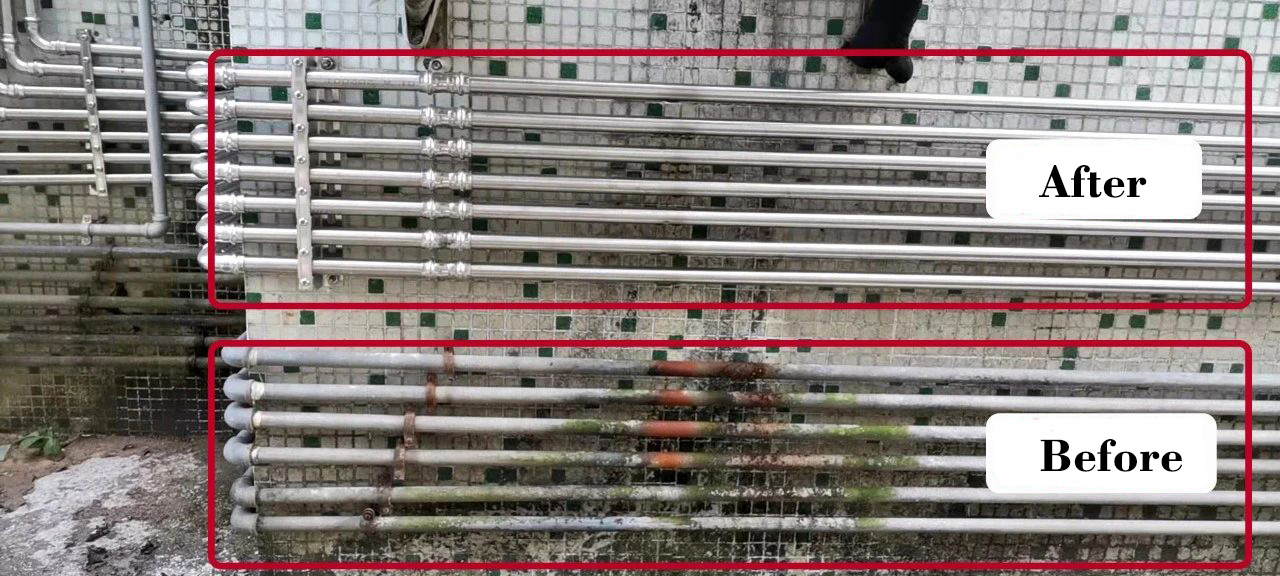
Comparison of stainless steel pipes and galvanized pipes
4. Selection Guide: 304 vs 316L
In practical engineering applications, the choice between 304 and 316L needs to be determined based on specific water quality conditions and working environments:
| Application Scenario |
Recommended Material |
Key Consideration |
| Municipal cold/hot water, drinking purified water |
304 |
Freshwater environment, low chloride content |
| General industrial pure water, food media |
304L |
Outstanding cost-performance |
| Water with high chloride content >200ppm |
316L |
Stronger chloride corrosion resistance |
| Seawater pipelines, desalination |
316L |
Contains molybdenum, saltwater corrosion resistant |
| Wastewater treatment, chemical wastewater |
316L |
Resistant to sulfides, chlorides and other complex corrosion |
| Pharmaceutical purified water, WFI |
316L |
Hygienic grade requirement, polished inner surface |
| Coastal area water supply systems |
316L |
Salt-spray corrosion resistance |
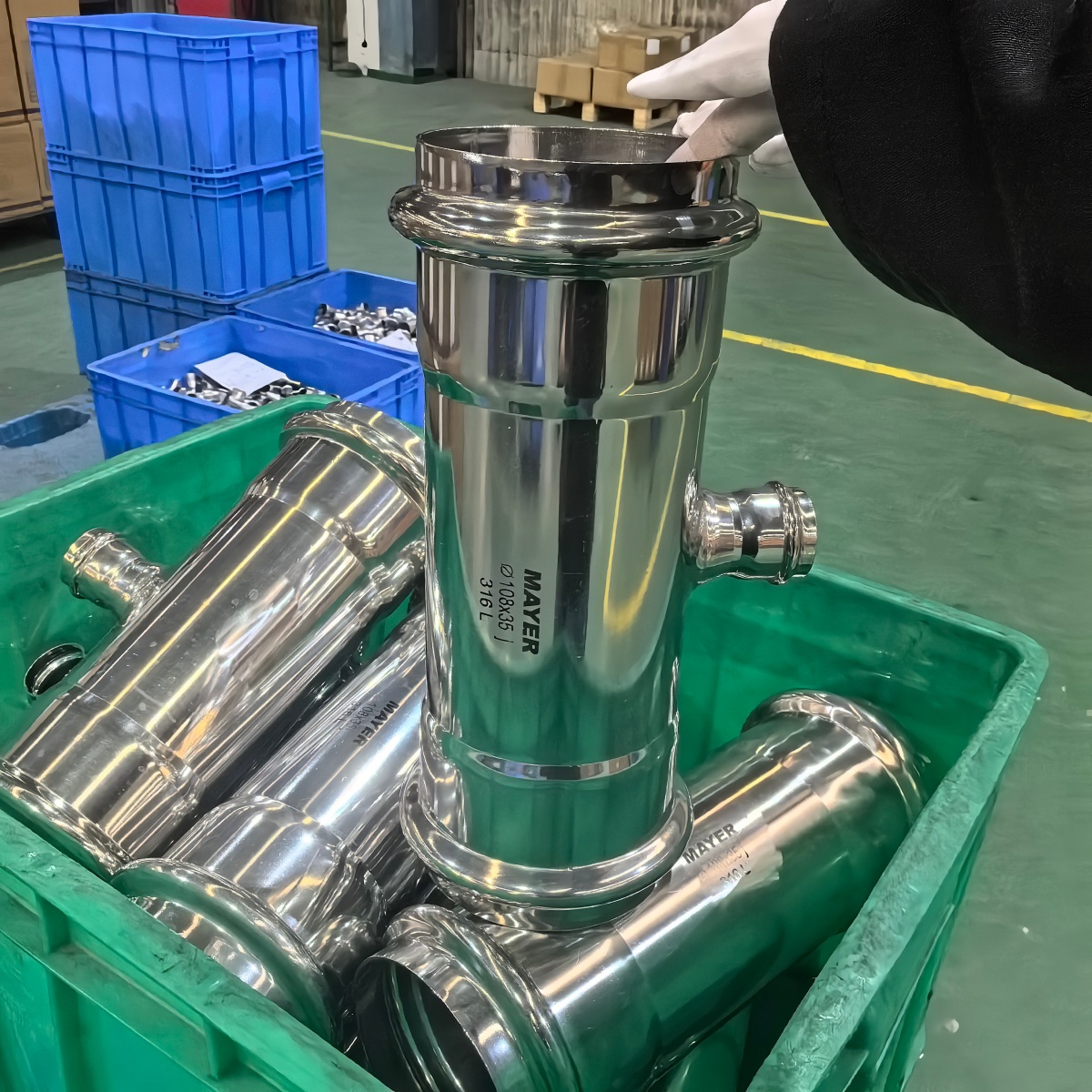
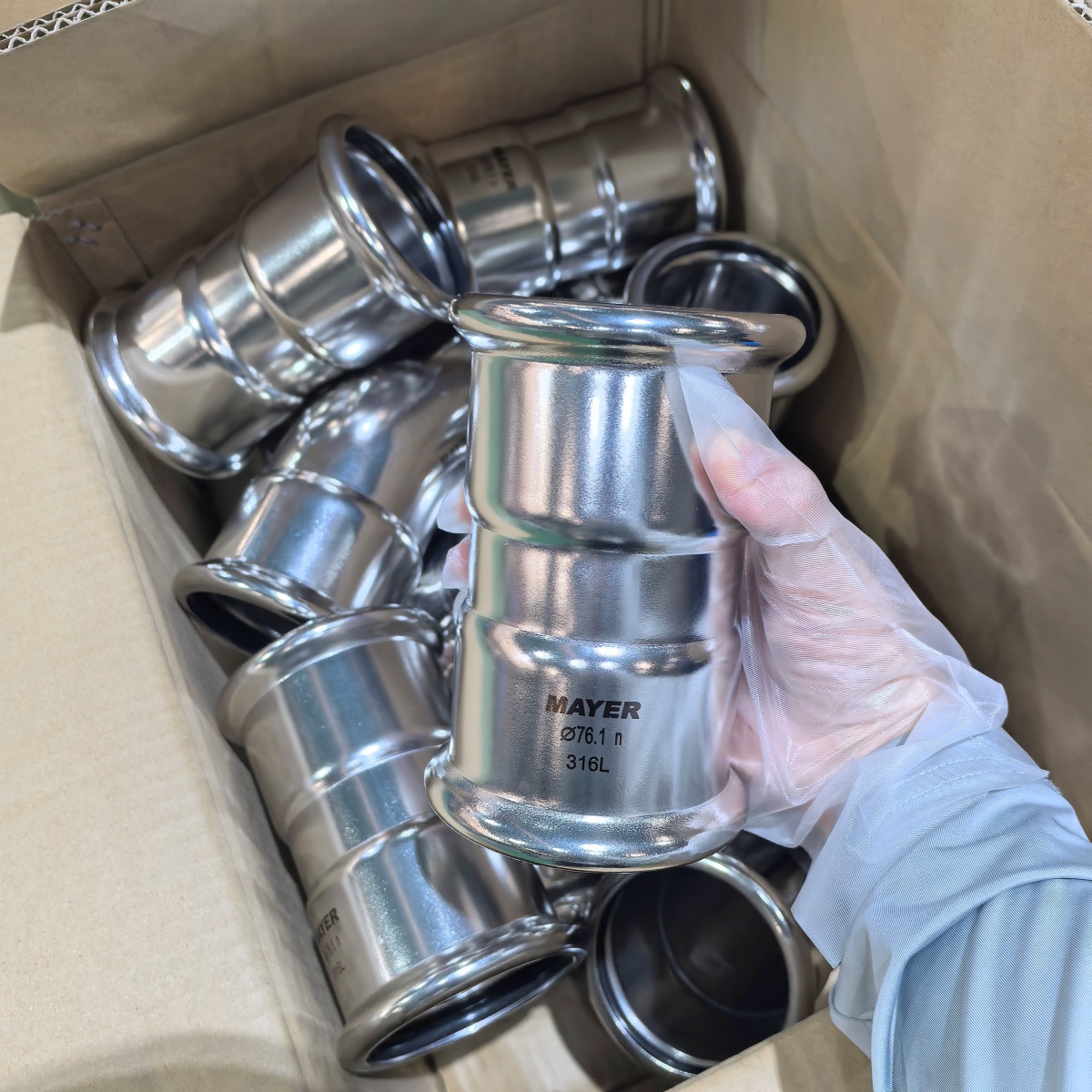
304/316L Stainless Steel Press Fitting
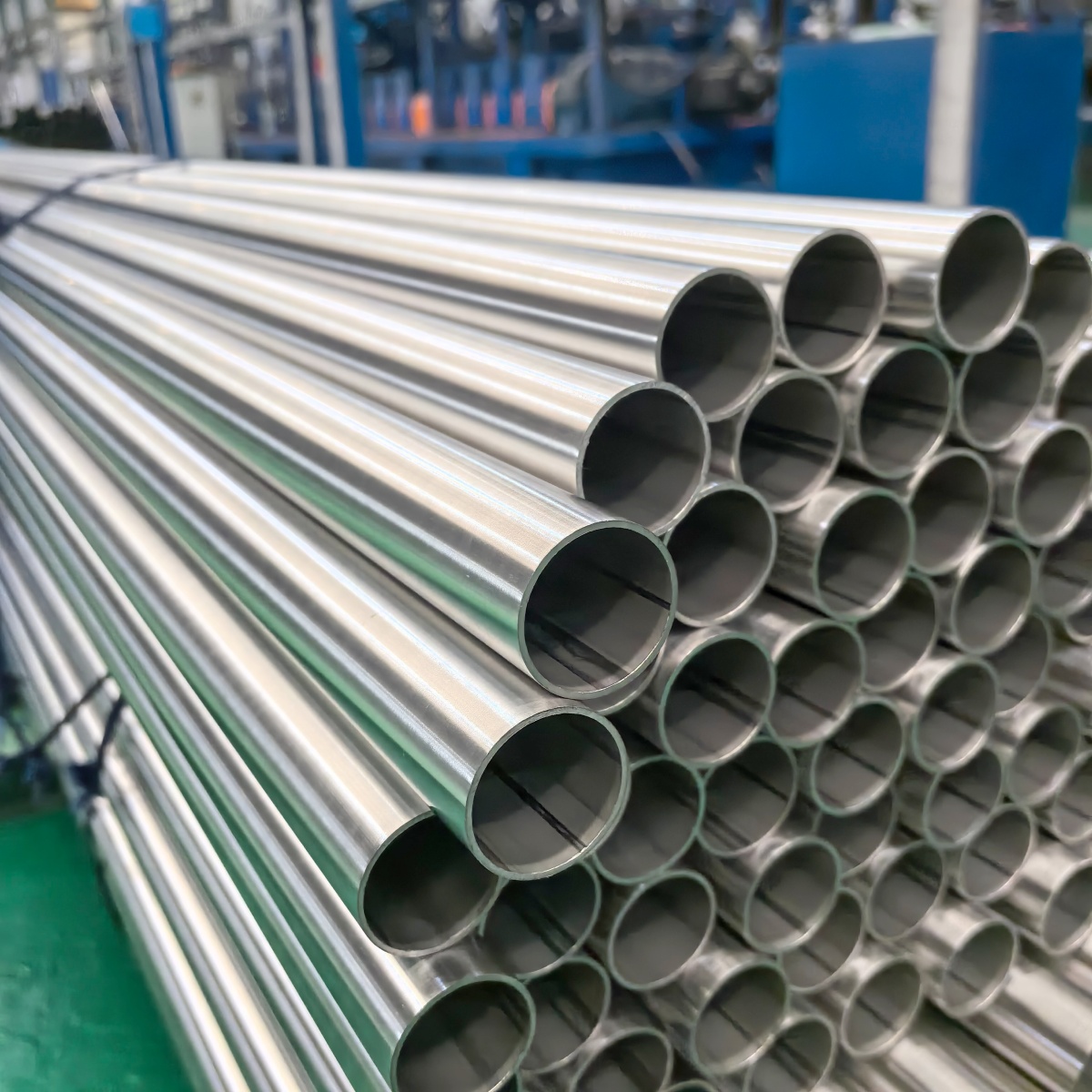
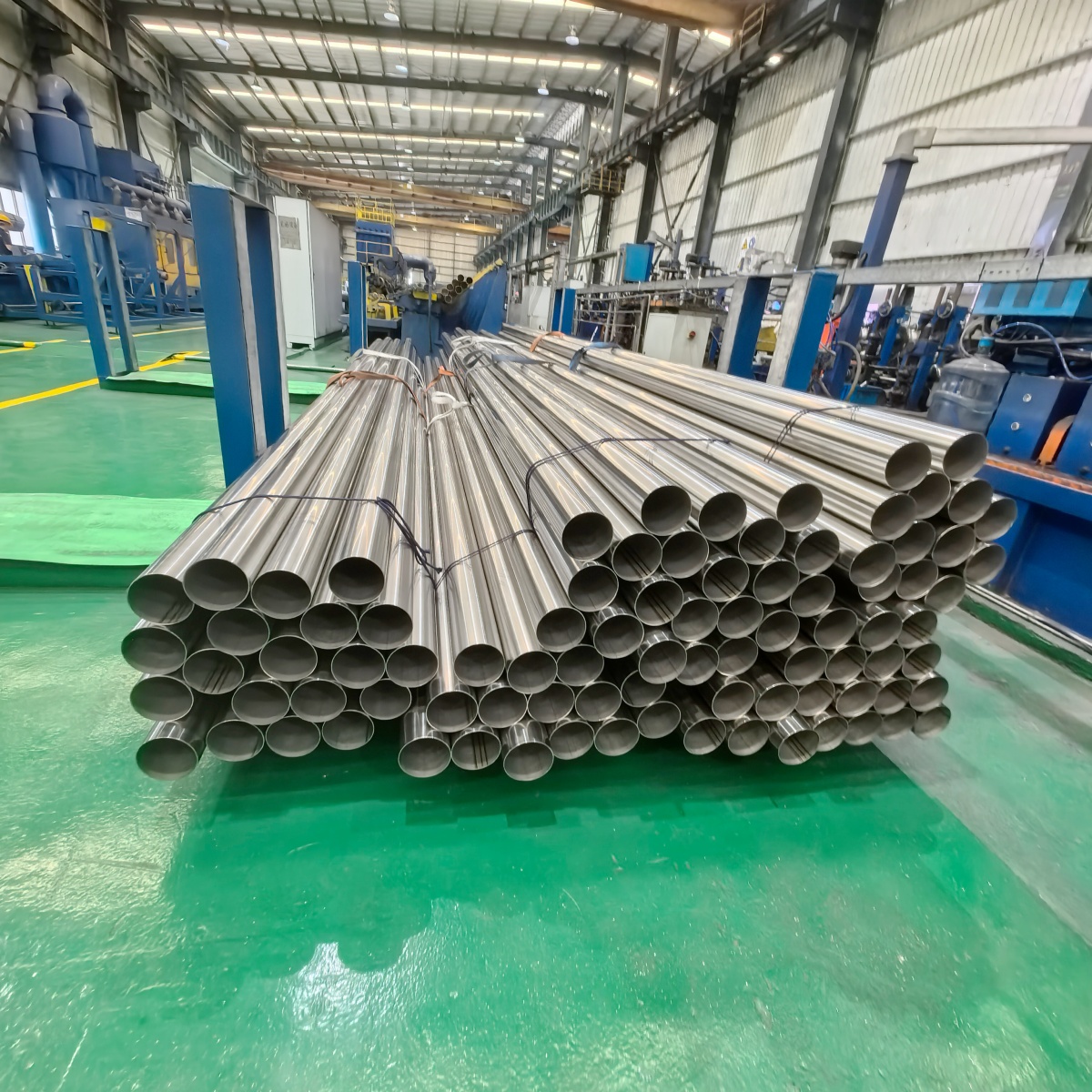
304/316L Stainless Steel Welded Pipe
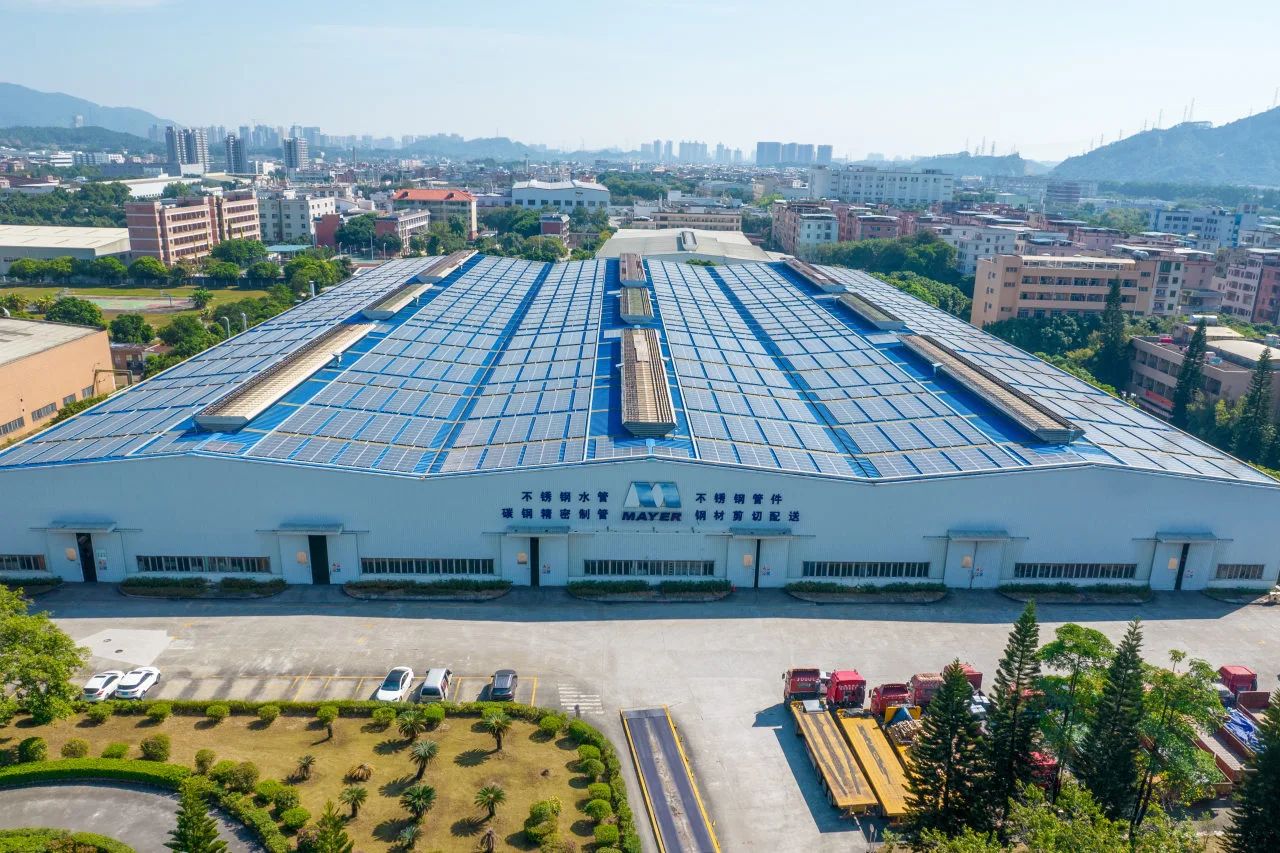
Welcome to Our Factory
5. Conclusion
In summary, the demand for stainless steel pipes and fittings in the water treatment field covers multiple sub-sectors including municipal water supply, wastewater treatment, desalination, industrial pure water, pharmaceutical and food. Among numerous pipe materials, 304/316L stainless steel welded pipes and fittings have become the first choice, fundamentally due to their superior corrosion resistance, hygienic safety in ensuring water quality, long service life, excellent high-strength properties, and the cost-effectiveness brought by welded pipes.
For freshwater environments and general water quality conditions, 304 stainless steel is a fully competent and cost-effective choice. For working conditions with high chloride content and strong corrosiveness – such as seawater environments, wastewater treatment, pharmaceutical pure water, etc. – 316L stainless steel, with its stronger corrosion resistance brought by molybdenum content, is an irreplaceable preferred material. Correctly choosing 304 or 316L stainless steel welded pipes and fittings can not only ensure the long-term stable operation of water treatment systems, but also safeguard the safety and cleanliness of every drop of water from the source.